


Clinical bottom line
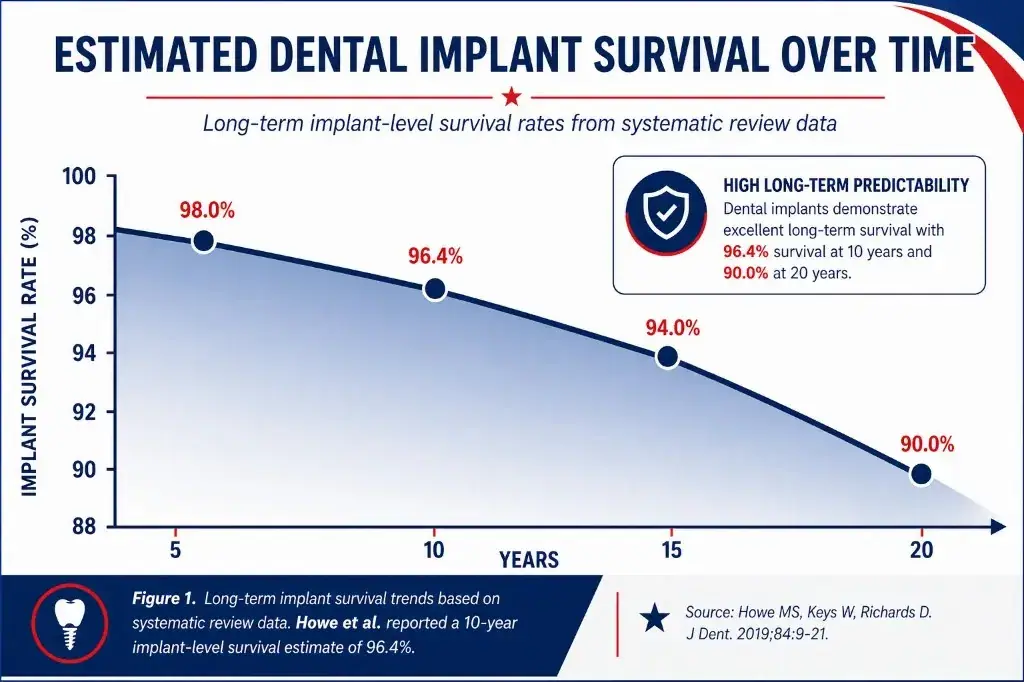
Dental implants show strong long-term survival in the literature, with one systematic review estimating a 10-year implant-level survival near 96.4%. The most important clinical question is not only whether an implant remains in place, but whether it stays healthy, comfortable, functional, and free from progressive bone loss over time.
Patients improve long-term outcomes by maintaining plaque control, avoiding smoking, managing diabetes, treating gum disease, and attending consistent professional maintenance visits.
Why Implant Longevity Is More Than a Percentage
While many patients hear that implants can last twenty years or more, longevity depends on multiple variables: bone quality, surgical planning, prosthetic design, bite force, oral hygiene, medical history, and maintenance quality over time.
At Texas Dental Center, implant longevity is framed as a long-term partnership between the treatment team and the patient. Technical excellence at placement must be matched by preventive behavior after restoration.
What the Research Says About Implant Survival
A systematic review and sensitivity meta-analysis by Howe, Keys, and Richards reported an estimated 10-year implant-level survival of 96.4%, supporting implants as a predictable long-term option when planning, placement, restoration, and maintenance are executed well.
Patients should also understand the distinction between survival and success: survival counts an implant that remains in the mouth, while success includes biological and mechanical health outcomes.
Survival vs. Success: A Critical Distinction
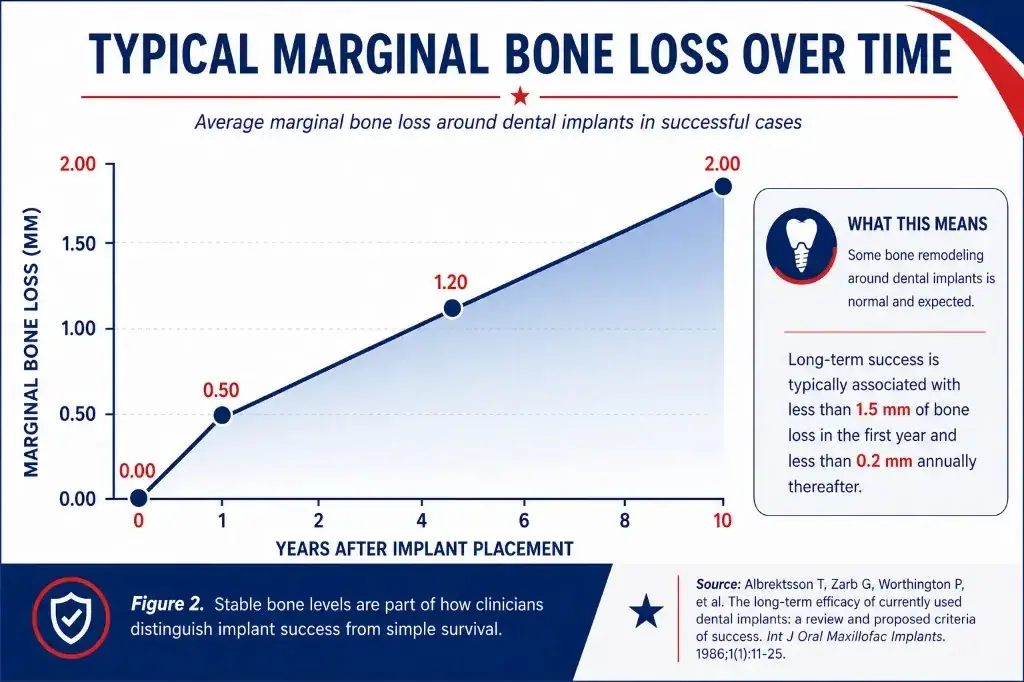
Survival indicates continued implant presence. Success indicates continued function, comfort, stability, healthy peri-implant tissues, and acceptable radiographic bone behavior.
Classic criteria from Albrektsson and colleagues emphasize absence of pain, absence of mobility, lack of radiographic pathology, and controlled marginal bone changes.
The Main Biological Threat: Peri-implantitis
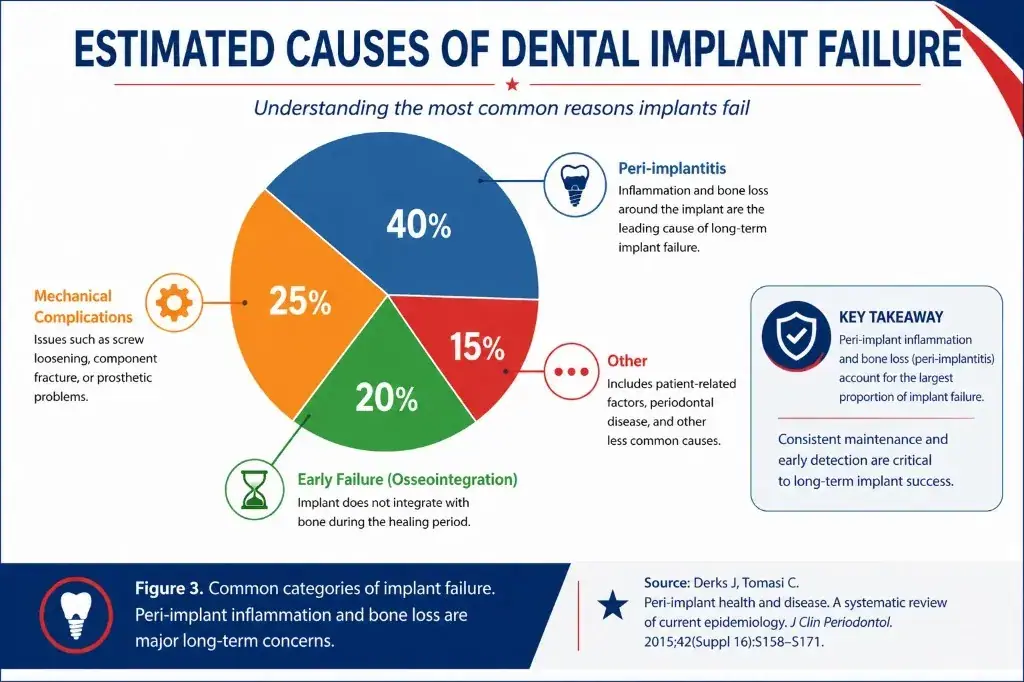
Peri-implantitis is a plaque-associated inflammatory disease with progressive supporting bone loss. Because early inflammation can be asymptomatic, periodic monitoring is central to long-term implant protection.
Risk Factors That Can Reduce Implant Longevity
Some contributors are procedure-related, while many are patient-modifiable. Smoking and poor glycemic control are repeatedly associated with reduced predictability. A prior history of periodontitis also increases biological vulnerability around implants.
Key Risk Factors
- Smoking and nicotine exposure
- Uncontrolled diabetes or poor glycemic control
- History of periodontitis and ongoing inflammatory burden
- Inadequate plaque control and inconsistent home care
- Excessive occlusal force, clenching, or grinding without protection
- Irregular professional maintenance and delayed follow-up care
The Role of Maintenance in Long-Term Outcomes
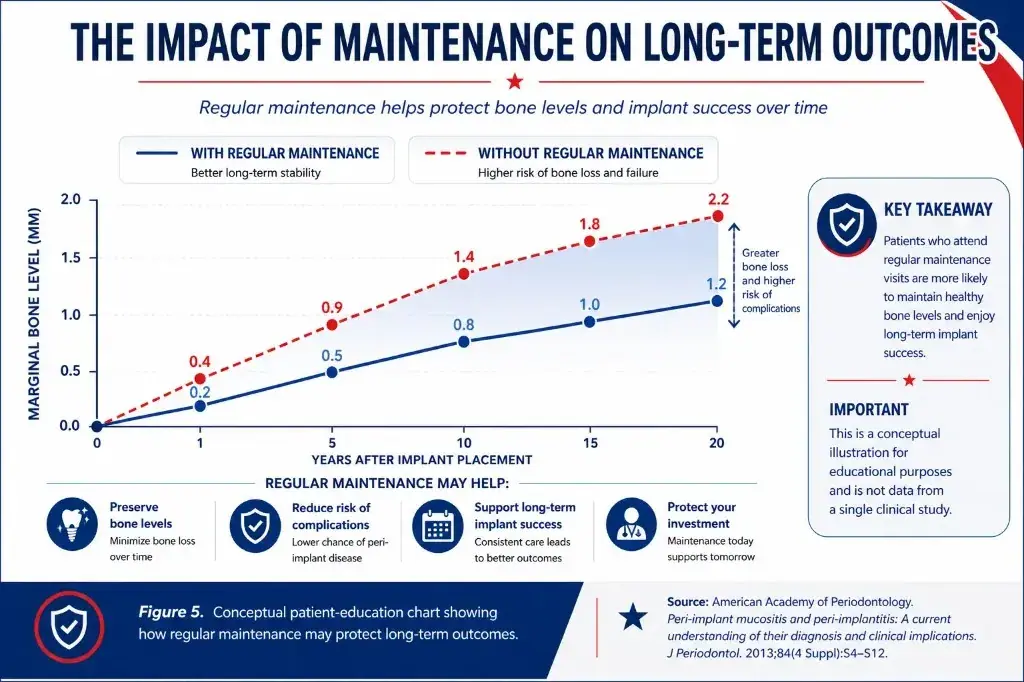
Supportive implant therapy is one of the most practical methods to preserve outcomes. It typically includes professional debridement, inflammation surveillance, bite checks, reinforcement of hygiene technique, and interval radiographic review where clinically indicated.
What Patients Can Do Right Now
Long-term success is protected after surgery through disciplined prevention. Patients should brush and clean around implants carefully, follow maintenance intervals, stop smoking, control diabetes, use a nightguard when advised, and avoid high-load habits such as chewing ice or hard objects.
References
- Albrektsson, T., Zarb, G., Worthington, P., & Eriksson, A. R. (1986). The long-term efficacy of currently used dental implants: A review and proposed criteria of success. The International Journal of Oral & Maxillofacial Implants, 1(1), 11-25. PubMed (opens in a new tab)
- Berglundh, T., Armitage, G., Araujo, M. G., Avila-Ortiz, G., Blanco, J., Camargo, P. M., et al. (2018). Peri-implant diseases and conditions: Consensus report of workgroup 4 of the 2017 World Workshop on the Classification of Periodontal and Peri-Implant Diseases and Conditions. Journal of Clinical Periodontology, 45(Suppl 20), S286-S291. PubMed (opens in a new tab)
- Howe, M. S., Keys, W., & Richards, D. (2019). Long-term (10-year) dental implant survival: A systematic review and sensitivity meta-analysis. Journal of Dentistry, 84, 9-21. PubMed (opens in a new tab)
- Lin, C. Y., Chen, Z., Pan, W. L., & Wang, H. L. (2019). The effect of supportive care in preventing peri-implant diseases and implant loss: A systematic review and meta-analysis. Clinical Oral Implants Research, 30(8), 714-724. PubMed (opens in a new tab)
- Mustapha, A. D., Salame, Z., & Chrcanovic, B. R. (2021). Smoking and dental implants: A systematic review and meta-analysis. Medicina, 58(1), 39. PubMed (opens in a new tab)
Looking for treatment options? Explore our dental implants service page for procedure details and candidacy guidance.
