


Clinical Bottom Line
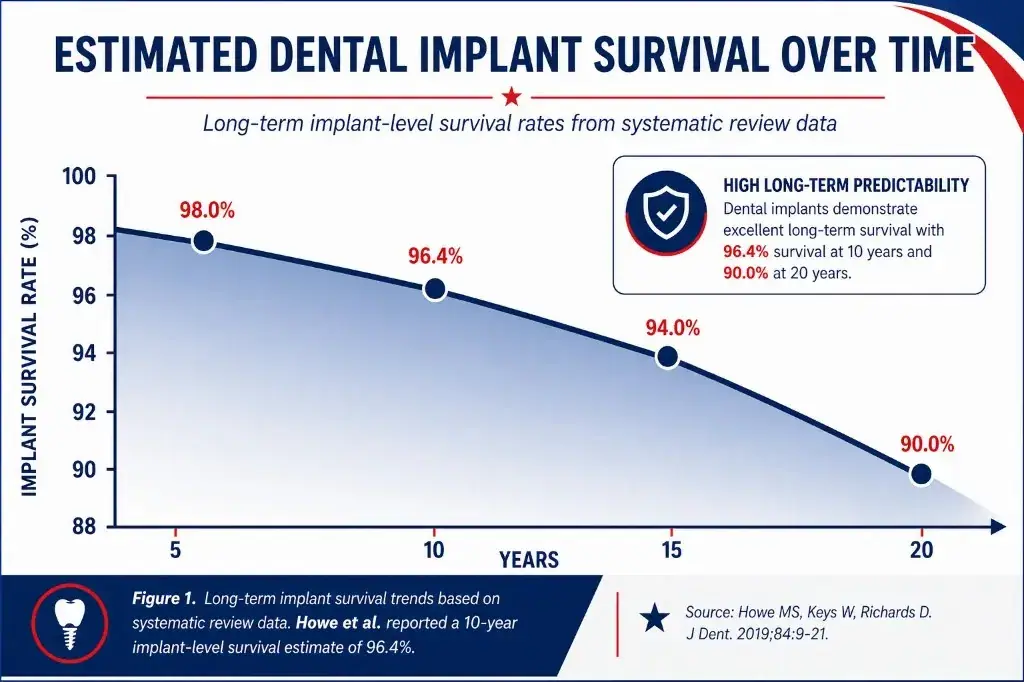
Dental implants demonstrate high long-term survival, with systematic review data reporting about 96.4% survival at 10 years. Survival alone does not define success. True long-term outcomes depend on preserving healthy bone and soft tissue, controlling risk factors, and committing to routine professional maintenance.
Implant Survival Over Time
Long-term research consistently identifies dental implants as one of the most predictable restorative options. Howe et al. reported a 10-year implant-level survival rate of 96.4%, with many longitudinal datasets clustering in the 95-98% range over a decade.
Survival indicates that an implant remains in place, but it does not automatically reflect long-term tissue health or stability.
Survival vs. Success: The Role of Bone Stability
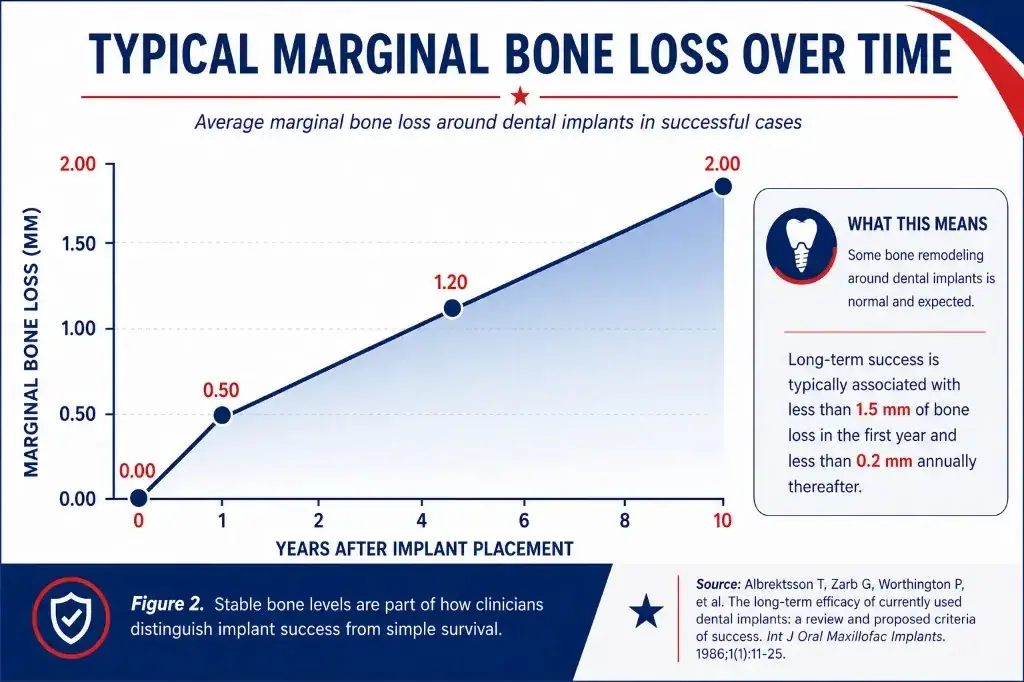
Albrektsson et al. established that successful implants should remain stable, pain-free, and free of ongoing pathology while demonstrating acceptable marginal bone change over time.
Typical thresholds cited in classic criteria include less than 1.5 mm of bone loss in year one and less than 0.2 mm annually thereafter.
Why Dental Implants Fail
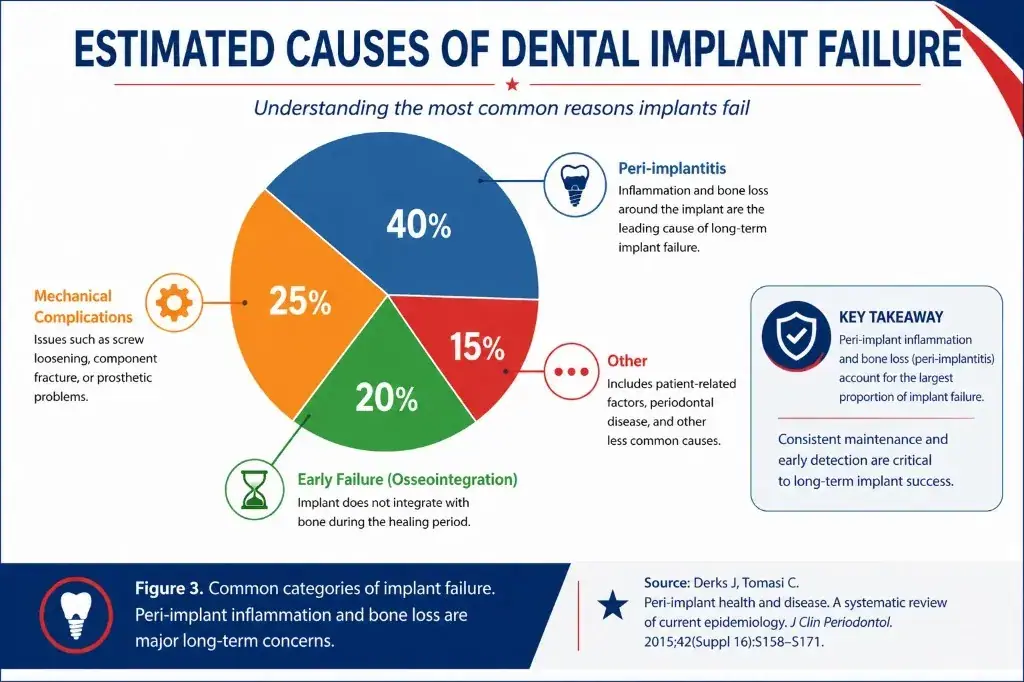
Early failure is usually related to disrupted osseointegration. Late failure is more often linked to biological and mechanical factors, especially peri-implant inflammation and progressive bone loss.
Risk Factors That Influence Implant Outcomes
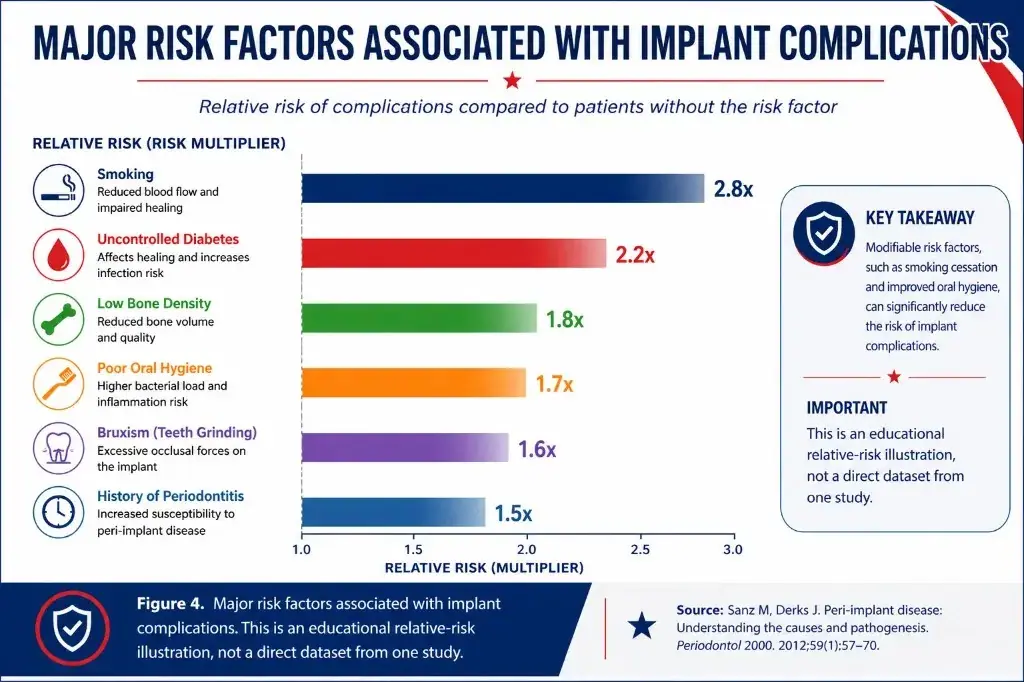
Risk can be biological, behavioral, and mechanical. Many major contributors are modifiable with guided preventive care.
Risk Factor Checklist
- Smoking and nicotine exposure
- Uncontrolled diabetes and poor glycemic control
- History of periodontal disease
- Poor oral hygiene and high plaque burden
- Bruxism and high occlusal load
- Low bone density and reduced bone support
The Importance of Maintenance and Follow-Up Care
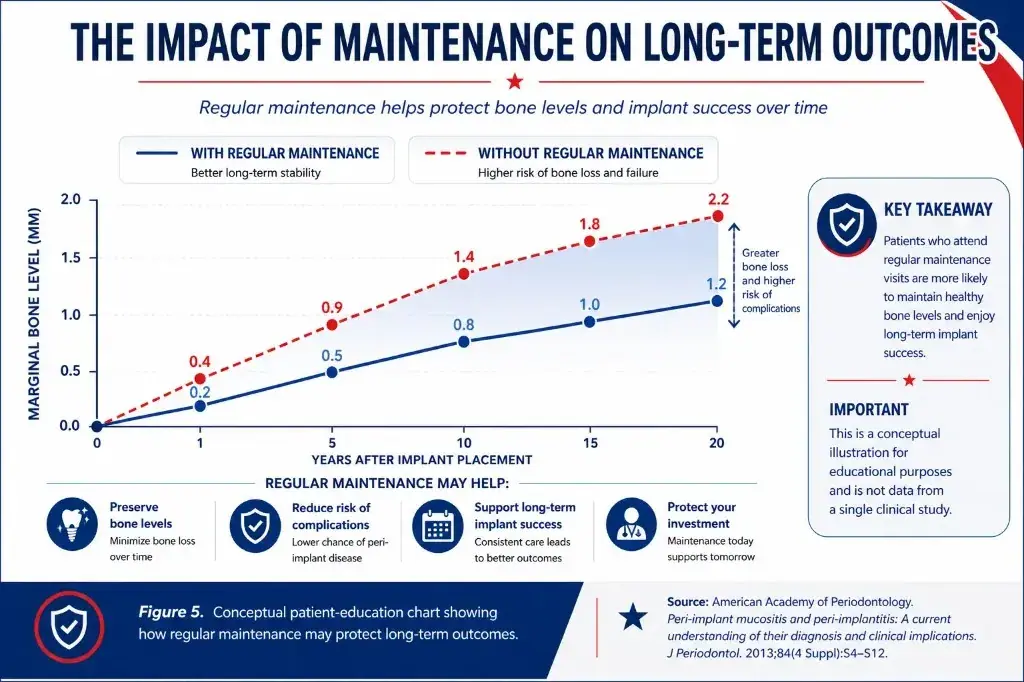
Supportive maintenance is one of the strongest levers for preserving implant health over time. Regular follow-up allows early intervention before minor inflammation progresses to structural loss.
Common Patient Questions
How long do dental implants last in published research?
What is the difference between implant survival and implant success?
What is the leading biological cause of late implant failure?
Do maintenance visits really affect implant longevity?
Can patients reduce implant risk factors themselves?
References
- Albrektsson, T., Zarb, G., Worthington, P., & Eriksson, A. R. (1986). The long-term efficacy of currently used dental implants: A review and proposed criteria of success. International Journal of Oral & Maxillofacial Implants, 1(1), 11-25. PubMed (opens in a new tab)
- Berglundh, T., et al. (2018). Peri-implant diseases and conditions: Consensus report of workgroup 4 of the 2017 World Workshop on the Classification of Periodontal and Peri-Implant Diseases and Conditions. Journal of Clinical Periodontology, 45(S20), S286-S291. PubMed (opens in a new tab)
- Howe, M. S., Keys, W., & Richards, D. (2019). Long-term (10-year) dental implant survival: A systematic review and sensitivity meta-analysis. Journal of Dentistry, 84, 9-21. PubMed (opens in a new tab)
- Lin, C. Y., et al. (2019). The effect of supportive care in preventing peri-implant diseases and implant loss: A systematic review and meta-analysis. Clinical Oral Implants Research, 30(8), 714-724. PubMed (opens in a new tab)
- Mustapha, A. D., et al. (2021). Smoking and dental implants: A systematic review and meta-analysis. Medicina, 58(1), 39. PubMed (opens in a new tab)
- Schwarz, F., Derks, J., Monje, A., & Wang, H. L. (2018). Peri-implantitis. Journal of Clinical Periodontology, 45(Suppl 20), S246-S266. PubMed (opens in a new tab)
Looking for treatment options? Explore our dental implants service page for procedure details and candidacy guidance.
